Restore Your Yard
Get rid of the chaotic mess of broken branches and fallen timber quickly.
Expert cleanup and hazard removal following severe coastal storms and East Coast Lows.
Serving Dunbogan and surrounding Camden Haven communities.
Our Storm Damage Tree Removal Dunbogan service gets your property back to normal after severe weather events.
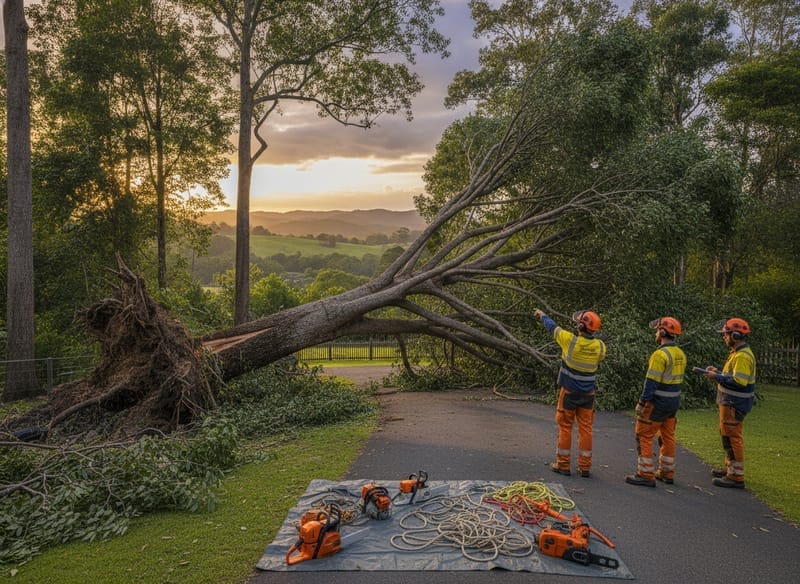
Dunbogan is highly exposed to autumn East Coast Lows that push gale-force winds onto saturated floodplains and sandy dunes, frequently tearing limbs from large eucalypts. We clean up the aftermath safely.
Get rid of the chaotic mess of broken branches and fallen timber quickly.
We identify and remove 'widow-makers'—broken branches trapped high in the canopy that could fall weeks later.
Our professional documentation makes dealing with your insurer much easier.
We evaluate the site for hazards, including powerlines and hanging branches.
We stabilize or remove the most dangerous elements first.
We cut up fallen trunks and process the large volumes of debris.
We check your remaining trees for fractures or root lift caused by the storm.
When an East Coast Low sweeps across the Mid North Coast, our coastal villages and established acreages take the absolute brunt of the weather. As the senior arborists at Port Macquarie Arborist, we provide rapid-response Storm Damage Tree Removal Dunbogan property owners can rely on when extreme wind and rain leave a trail of destruction. Saturated soils on the Camden Haven floodplain combined with gale-force coastal winds often lead to catastrophic root-plate failures and heavy limb breakages, particularly in towering native eucalypts.
Our team understands the stress of waking up to a massive Swamp Mahogany or Blackbutt resting on your roof or blocking your driveway. We operate with a fleet of specialised trucks, wood chippers, and high-access equipment ready to deploy across Dunbogan, Laurieton, North Haven, and the surrounding suburbs. Whether you are dealing with a shattered canopy in an aged Tallowwood, a failed Norfolk Island Pine on the foreshore, or multiple fallen trees on a steep hinterland block beneath North Brother Mountain, our climbers and ground crew have the expertise to handle it safely and efficiently.
Storm-wrecked trees are entirely different beasts compared to healthy, standing timber. When a tree fails, its massive weight creates severe, unpredictable forces known as tension and compression wood. If you cut into a fallen limb without understanding these forces, the timber can violently snap back, roll, or instantly bind a chainsaw bar, causing catastrophic injuries.
Many property owners and well-meaning handymen attempt DIY storm cleanup, only to quickly find themselves out of their depth. A partially fallen tree hung up in the canopy of an adjacent tree—often called a 'widow-maker'—is incredibly unstable and can drop without warning. Furthermore, amateur attempts to pull fallen trees off structures often drag the heavy timber across rooflines, causing thousands of dollars in secondary property damage.
Our solution is a professional, AS4373-compliant approach to storm recovery. Before any cutting begins, our qualified arborists assess the site to identify structural hazards, hazardous hanging limbs, and ground stability. We use advanced rigging techniques, pulleys, and friction devices to safely isolate and lower damaged sections without relying on gravity alone. By using our fully insured team, you protect your home, your family, and your liability, ensuring the mess is cleared safely and effectively.
Storm recovery requires highly specialised arboricultural techniques. Our team utilises a range of advanced methods to safely dismantle and extract compromised trees under hazardous conditions.
We immediately walk the property to categorise hazards. Priority one is securing trees that threaten dwellings, powerlines, or critical access routes. We isolate the danger zones and perform immediate make-safe pruning to stabilise the site before full removal begins.
Storm-thrown timber holds immense stored energy. Our AQF Level 3 arborists utilise specialised cross-cutting techniques, including step cuts and bore cuts, to safely release bound pressure without the log splitting or rolling violently during the dismantling process.
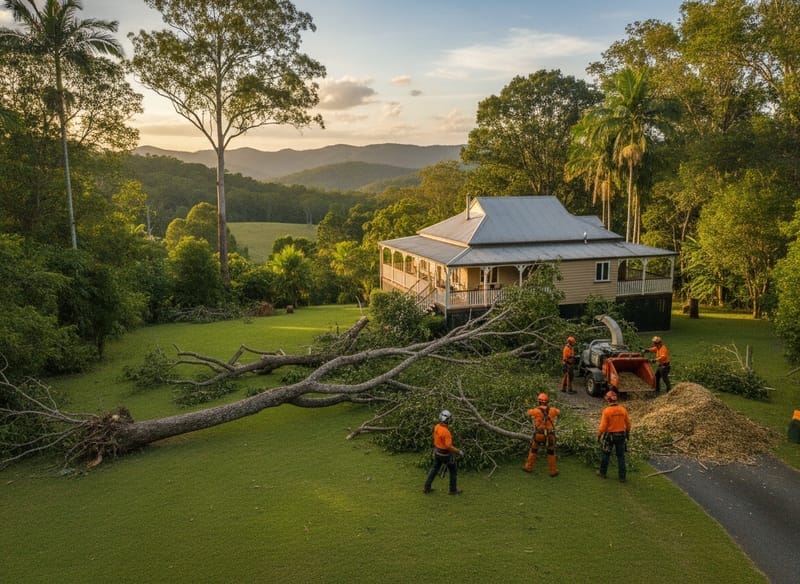
When massive eucalypts collapse onto roofs or into tight residential boundaries, traditional felling is impossible. We work alongside local crane operators to sling, lift, and extract heavy tree sections vertically off your structure, completely eliminating the risk of secondary impact damage.
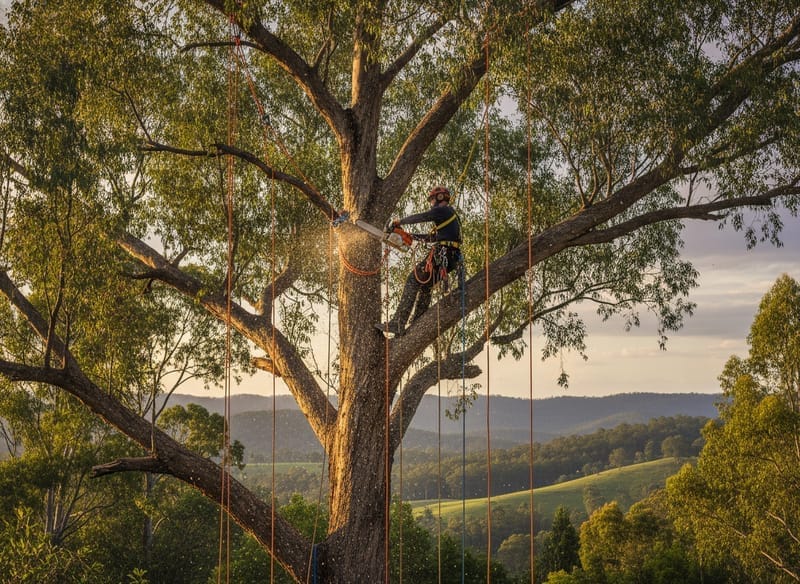
Partially failed branches suspended high in the canopy require precise rope access. Using double-rope climbing techniques and advanced friction devices, our climbers safely access the remaining stable structure, secure the broken limbs, and lower them to the ground in controlled sections.
When saturated soil causes a whole-tree failure, the massive root plate can unexpectedly snap back into its hole once the trunk's weight is severed. We use heavy machinery, winches, and strategic severing methods to stabilise the root ball before we process the main stem.
When a severe storm hits, a coordinated, step-by-step response is crucial to restore safety to your property. Our process begins the moment you call our local team. We conduct an urgent over-the-phone triage to understand the severity of your situation, prioritising trees resting on structures or blocking vital access.
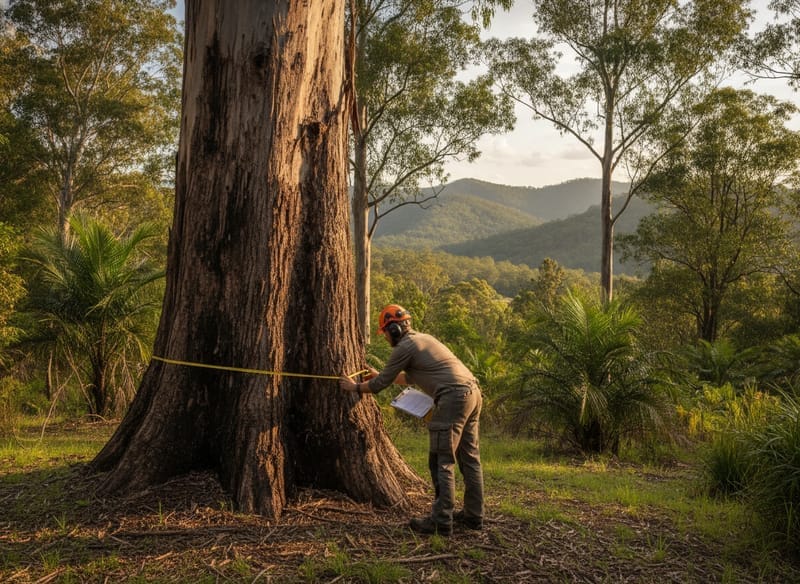
Upon arrival, our arborists perform a comprehensive site hazard assessment. We document the damage extensively with photographs and written notes. This documentation is critical, as insurers require clear evidence of the fallen or damaged timber before cleanup commences. We then provide a detailed, itemised quote breaking down the cost of make-safe works versus complete removal and stump grinding.
Once the strategy is agreed upon, our crews begin the make-safe phase, meticulously rigging and removing the high-risk timber off your home or driveway. After the immediate hazards are neutralised, we systematically dismantle the rest of the debris. Our heavy-duty chippers process the foliage and branches into mulch on-site, while our tipper trucks and skid steers remove the heavy logs and clean up your yard. Finally, we provide all necessary invoicing and arborist reports directly formatted for your insurance claim, ensuring a smooth and stress-free resolution.
Safety is non-negotiable in storm recovery. Our crews are led by AQF Level 3 certified arborists holding all necessary tickets, including Working at Heights, EWP operations, and high-risk tree felling. We carry comprehensive Public Liability and WorkCover insurance, protecting your property throughout the highest-risk operations.
When salvaging storm-damaged trees that don't require full removal, we strictly adhere to AS4373 - Pruning of Amenity Trees. We never 'lop' or 'top' shattered branches, as this promotes weak epicormic regrowth and rapid decay. Instead, we perform correct target pruning to the branch collar, giving your retained trees the best possible chance to heal and survive.
Dealing with council regulations after a storm can be confusing. Under the Port Macquarie-Hastings Council (PMHC) Development Control Plan 2013, you generally need a permit to remove any tree over 3m high or with a trunk diameter of 100mm. However, there are exemptions for dead, dying, or dangerous trees—but Council must be satisfied this is the case.
For Storm Damage Tree Removal Dunbogan property owners must keep photographic evidence of the hazard before we cut. If the tree has not completely fallen but is structurally compromised, an AQF Level 5 consulting arborist report may be required to justify its urgent removal under the exemption, especially if your property falls within a mapped Koala Habitat Area or the coastal littoral rainforest zones.
Our team navigates these rules daily. We know how to document storm damage in Dunbogan properly, ensuring you remain compliant with PMHC requirements, whether your property sits on the sandy foreshore, the soft river floodplains, or the bushfire-prone steep slopes bordering the national park.
After the immediate storm damage has been cleared, it is vital to monitor the remaining trees on your property. High winds can cause microscopic fractures in branches or partially lift root plates that may not fail until weeks after the weather event.
We advise walking your property regularly to check for fresh cracks in the soil around tree bases, leaning trunks, or hanging branches that may have been missed during the initial chaos. If you retained heavily pruned trees, we recommend booking our team for a follow-up inspection in six to twelve months. We can perform formative pruning to manage any epicormic growth, ensuring the newly developing canopy remains structurally sound and resilient against the next Mid North Coast storm season.
Storm cleanup is priced based on the volume of debris and the complexity of the hazards.
We provide transparent, upfront quotes for all storm recovery work.
We assist with storm cleanup across the local region.
Call our expert arborists for safe, efficient hazard removal and debris clearing.
Get a Free Quote