Healthier Trees
Avoid the disease and decay caused by indiscriminate lopping cuts.
Professional canopy management and height reduction by qualified arborists.
Serving Kew and the greater Port Macquarie region.
When residents ask for Tree Lopping Kew, they usually want to reduce the size or hazard of a large tree. We achieve this through proper, standards-compliant techniques.
Many older trees in Kew have been poorly lopped in the past. We help residents manage these damaged trees, correcting their structure or safely removing them if they are beyond saving.
Avoid the disease and decay caused by indiscriminate lopping cuts.
Proper height reduction manages size without creating dangerous, weak regrowth.
Maintain the natural shape and beauty of your trees.
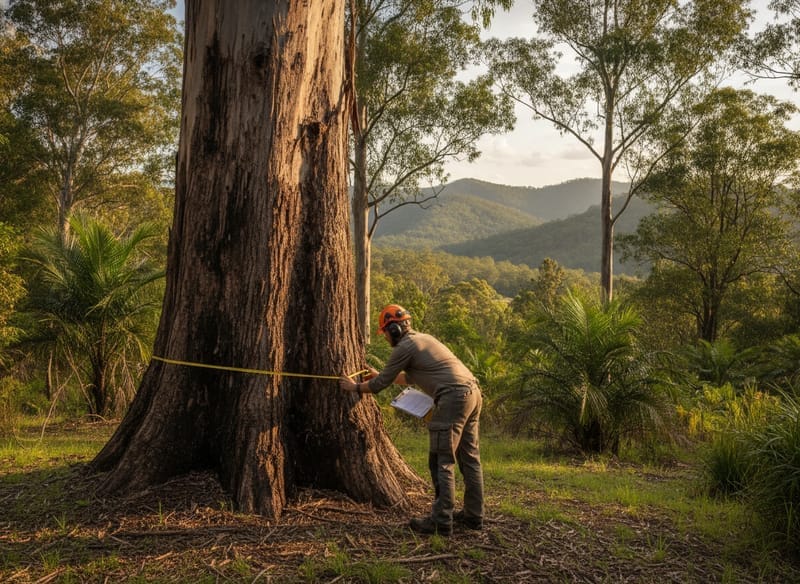
We assess the overgrown tree and determine the best strategy to reduce its size safely.
We explain why targeted pruning or removal is a better long-term solution than lopping.
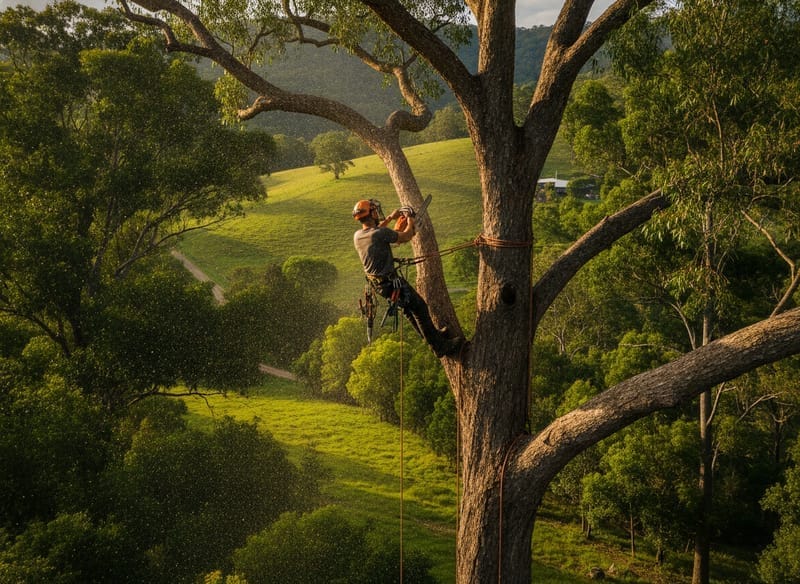
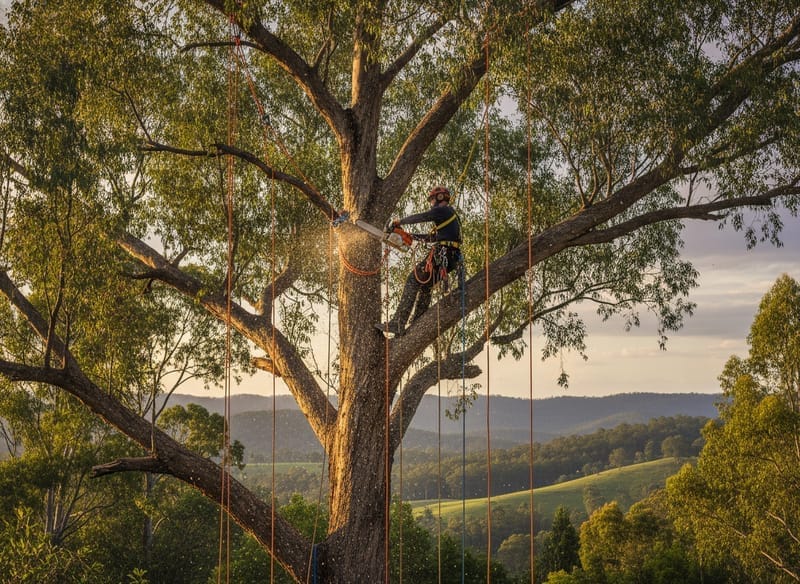
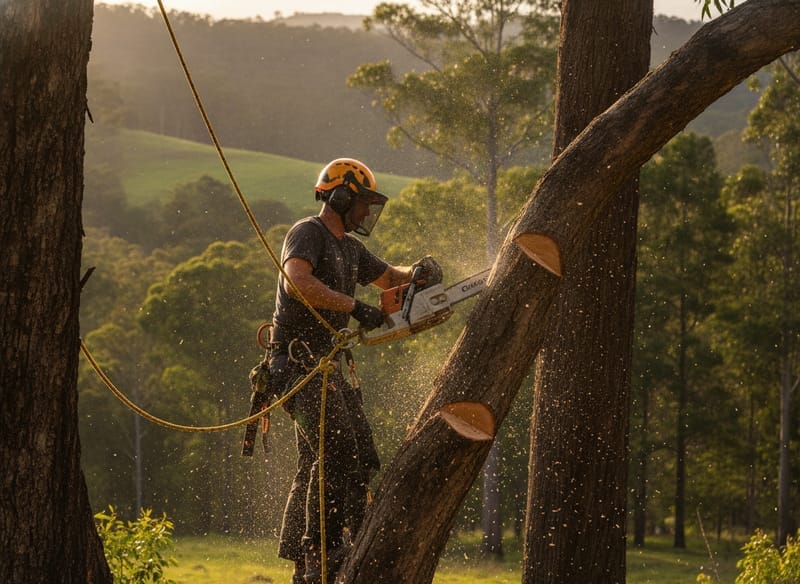
Our climbers make precise cuts to reduce height and weight properly.
All branches and debris are chipped and removed from your yard.
When established eucalypts cast heavy shade or limbs threaten your roofline, you need professional Tree Lopping Kew. Whether you are managing an acreage block backing onto bushland or a residential home with overgrown natives, our team understands the unique challenges of keeping Kew properties safe and presentable. We know that when locals ask for tree lopping, they usually just want a large, intimidating tree made smaller or pulled back from the gutters.
Kew sits beautifully among coastal eucalypt forests, meaning properties here are often shaded by towering blackbutts, tallowwoods, and flooded gums. While these trees offer incredible amenity, they also catch the brunt of our summer storms and East Coast Lows. Unmanaged canopies overhanging houses are a major hazard when the wind picks up. Our climbers and ground crews are here to reduce those risks, providing expert canopy management that protects your property while preserving the structural integrity of your trees.
Many homeowners call us asking for tree lopping because they want a problematic tree cut down to size. However, in the arboriculture industry, traditional "lopping" or "topping"—indiscriminately hacking branches mid-span to leave large, blunt stubs—is heavily discouraged. If you hire an under-qualified operator to simply chop the top off your towering swamp mahogany, the results can be disastrous.
Old-school lopping removes too much of the live canopy, starving the tree and triggering a stress response. The tree will rapidly push out "epicormic" regrowth—a dense mass of poorly attached, wildly growing shoots. Within a year or two, you end up with a tree that is just as wide, infinitely uglier, and far more likely to drop branches on your roof during a Port Macquarie storm. The large pruning wounds also invite decay and disease right into the trunk.
Our solution is different. We deliver the result you want—a safer, smaller, more manageable tree—without ruining it. Our team strictly adheres to AS4373 - Pruning of Amenity Trees. Instead of lopping, we use targeted techniques like crown reduction and selective pruning. We make precise collar cuts that allow the tree to heal naturally. You get the clearance and sunlight you need, and the tree remains structurally sound, vastly reducing your long-term maintenance costs and storm hazards.
When you ask us to reduce a tree's size, we rely on industry-approved techniques rather than indiscriminate lopping. Here are the methods our qualified arborists use to achieve your goals safely.
This is the safest alternative to topping. We selectively prune branches back to natural growth points (lateral branches) to reduce the overall height or spread of the canopy. This method preserves the natural shape of the tree while keeping the total live-crown removal within the safe 25–30% threshold.
Ideal for branches hanging too low over driveways, footpaths, or roofs. We remove the lowest branches back to the trunk using precise branch collar cuts, instantly increasing ground clearance without compromising the upper canopy's health.
We selectively remove secondary branches throughout the canopy to let more light and wind pass through. This reduces the "sail area" of the tree, making it much less likely to fail during the gale-force winds brought on by East Coast Lows.
Used when a specific branch is causing an issue—such as encroaching on service lines or rubbing against your eaves. We target only the problematic limbs, leaving the rest of the tree intact and balanced.
In cases of severe storm damage where structural failure has already occurred, heavy reduction or complete dismantling is required. Using our elevated work platforms (EWPs) or rope-access techniques, we safely reduce the hazardous timber before it causes further property damage.
Delivering professional Tree Lopping Kew services requires a systematic approach, especially when dealing with mature trees near homes. Here is exactly how we handle your canopy reduction project.
First, we start with a thorough on-site assessment. We discuss what you want to achieve—whether that is more sunlight, roof clearance, or reducing storm hazards. We then evaluate the tree species, its health, and the safest access method, providing a transparent, itemised quote for the best AS4373-compliant pruning strategy.
Next, we check local regulations. If your tree work requires a permit under the Port Macquarie-Hastings Development Control Plan, we will guide you through the process, ensuring all paperwork is sorted before any chainsaws start.
On the day of the job, our crew arrives with the right equipment for the terrain. For tight residential blocks, our climbers use double-rope access techniques. For more accessible acreage, we utilise cherry pickers (EWPs) to reach the canopy safely. Using top-handle climbing saws, we make precise, targeted cuts.
Finally, we process all green waste on-site. Branches are fed through our heavy-duty chippers, and larger logs are loaded into our tipper trucks. We rake and blow down the site, leaving your yard impeccably clean and your tree perfectly shaped.
Tree work is inherently dangerous, particularly when dealing with large coastal eucalypts in unpredictable weather. Our team consists of highly trained arborists holding AQF Level 3 certifications, ensuring every climber and chainsaw operator understands the mechanics of safe tree reduction.
We never compromise on safety. Our crews operate strictly under the AS4373 - Pruning of Amenity Trees guidelines to guarantee the long-term health of your canopy. Furthermore, our business is fully insured with comprehensive Public Liability and WorkCover policies. When our trucks and chippers roll onto your Kew property, you have complete peace of mind knowing you are protected by legitimate, qualified professionals who never cut corners.
Working in Kew requires deep local knowledge of both the environment and council rules. The Port Macquarie-Hastings Council regulates tree works heavily to protect our coastal eucalypt forests. Generally, you need a permit to prune or remove any tree over 3 metres high, or with a trunk thicker than 100mm.
While there is a common exemption allowing work on trees within 5 metres of an existing dwelling, this can be overridden if your property falls under a mapped Koala Habitat Area or specific environmental overlays. Kew is home to vital koala food trees like the tallowwood and swamp mahogany, which are strictly protected.
We understand the local topography, from the softer ground on the floodplains to the acreage blocks backing onto bushland. We know how the humid subtropical climate accelerates regrowth, meaning precise pruning is essential to avoid constant, expensive call-backs. We will ensure your canopy management complies with all local planning schemes while handling the logistical challenges of our local environment.
Once we have reduced your tree's canopy, proper aftercare ensures it recovers quickly and maintains its new shape. Because we use precise collar cuts rather than blunt lopping, the tree will seal its own wounds naturally. Never apply pruning paints or sealants, as these trap moisture and encourage decay.
During the humid summer months, ensure the tree receives adequate water during dry spells to minimize stress. Keep an eye out for any rapid, unusual epicormic shoots, though our AS4373-compliant methods are designed to prevent this. We recommend scheduling a follow-up assessment every two to three years to inspect for new deadwood, ensure structural stability, and maintain the clearance we achieved.
Pricing depends on the size of the tree and the extent of the reduction required.
Contact us for a free quote on managing your overgrown trees.
Providing professional tree management alternatives to lopping.
Choose proper, safe tree care. Contact us today for a free quote.
Get a Quote