Restored Access
Clear blocked driveways and paddocks quickly.
Comprehensive post-storm tree cleanup for rural and residential properties.
Clearing storm damage across King Creek.
Our Storm Damage Tree Removal King Creek service focuses on the heavy lifting required after severe weather events ravage your property.
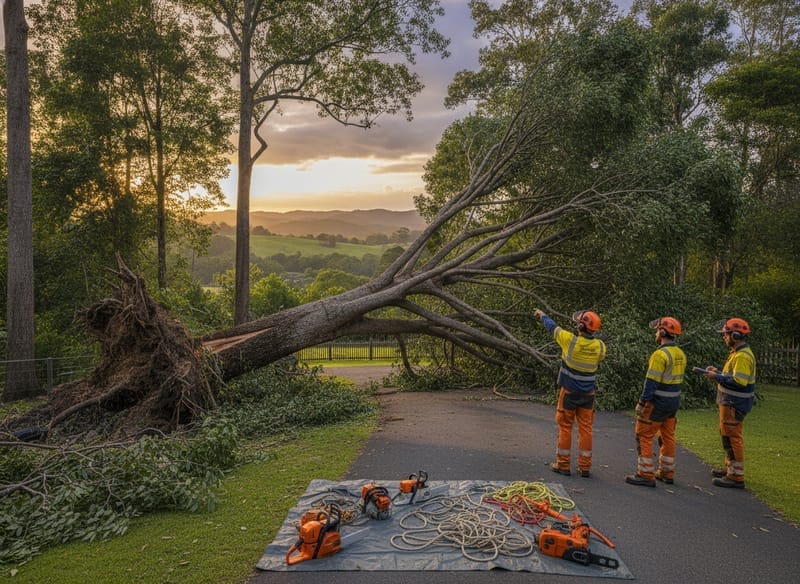
King Creek's saturated ground during East Coast Lows often leads to whole-tree uprooting. We have the tracked equipment and 4x4 trucks necessary to access and clear soft-ground rural properties safely.
Clear blocked driveways and paddocks quickly.
Ensure no broken branches fall on you during the post-storm cleanup.
Turn a chaotic, debris-filled yard back into a safe, clean space.
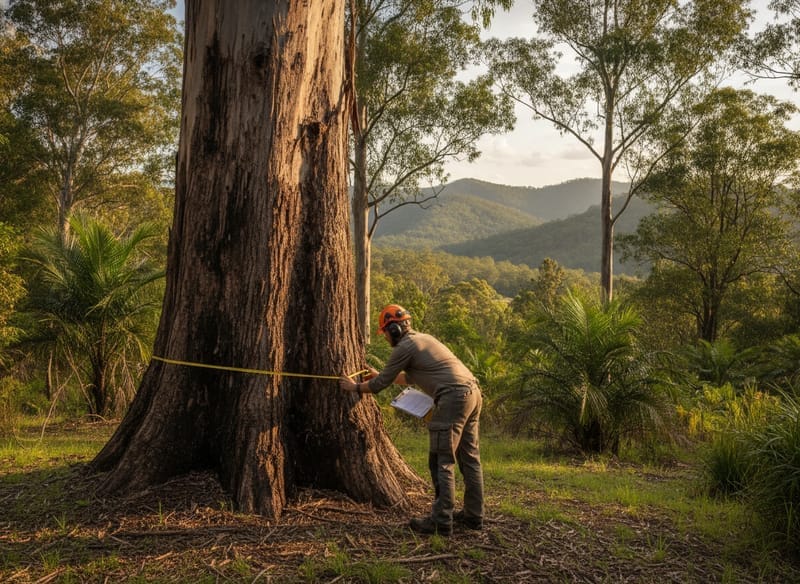
We inspect your property for fallen trees and suspended hazards.
We tackle the highest-risk threats to your home and fences first.
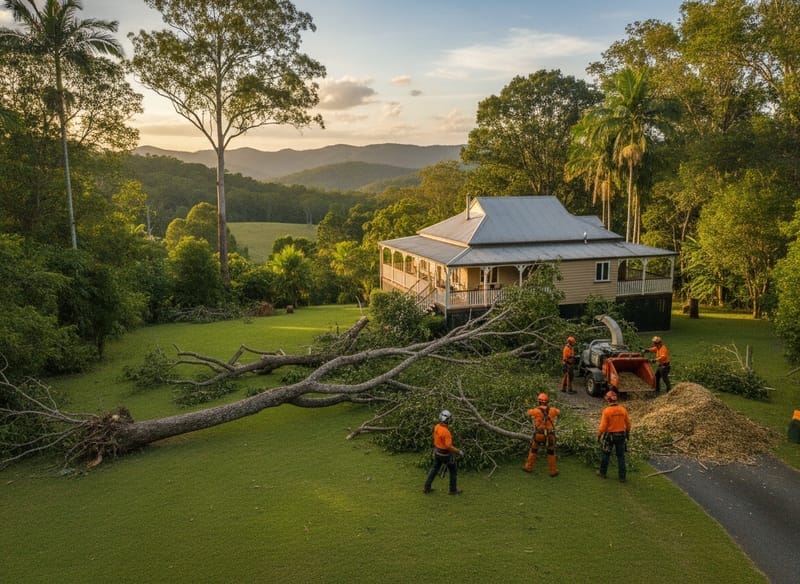
Fallen trees are sectioned, chipped, and removed.
We ensure remaining trees are structurally sound before leaving.
When severe coastal lows and summer storms sweep through the mid-north coast, established acreage properties often bear the brunt of the destruction. If you are dealing with uprooted blackbutts, snapped tallowwood branches, or compromised canopies hanging over your roof, you need immediate, professional assistance. At Port Macquarie Arborist, our team provides rapid and reliable Storm Damage Tree Removal King Creek residents can trust to secure their properties safely.
King Creek’s rural residential character means homes are nestled among towering native eucalypts. While beautiful, the combination of saturated soils from heavy subtropical rainfall and gale-force winds frequently leads to catastrophic root-plate failures and snapped limbs. Whether a fallen flooded gum is blocking your driveway, a massive branch has crashed through a fence, or a leaning tree threatens your home, our qualified local climbers and heavy-duty machinery operators are ready to respond. We clear the danger, make your site safe, and restore order to your property without delay.
Attempting to clear storm-wrecked trees without professional training is incredibly dangerous. Hung-up branches, twisted trunks under extreme tension, and partially uprooted root plates act as loaded springs. A single wrong cut with a chainsaw can cause a massive timber release, leading to severe injury, equipment damage, or further property destruction. Furthermore, under-qualified operators or DIY homeowners often lack the necessary heavy lifting equipment, leaving dangerous debris behind or worsening the damage by dropping limbs onto secondary structures.
Our qualified arborists solve these complex hazard scenarios using advanced rigging, expert tension-reading, and mechanised lifting. We approach every emergency with a calculated, safety-first mindset. For trees that have suffered severe canopy damage but remain standing, we assess whether they can be saved via restorative pruning under AS4373—Pruning of Amenity Trees.
Instead of indiscriminately lopping torn branches—which promotes weak epicormic regrowth, accelerates decay, and creates future hazards—we perform precise target pruning back to the branch collar to give the tree the best chance of recovery. If the tree is beyond saving and poses a direct threat, we dismantle it methodically. We bring the right tipper trucks, chippers, and skid steers to get the whole tree gone safely, ensuring your property is fully cleared and secure.
We utilise specialised equipment and advanced arboricultural techniques to safely dismantle broken, hung-up, and fallen timber. Our methods are designed to mitigate risk and efficiently clear your property.
Fallen or leaning trees hold immense kinetic energy. Our AQF Level 3 climbers and ground crews expertly read the compression and tension woods, applying specialized chainsaw cuts to release the pressure safely without binding the saw or causing the log to barber-chair.
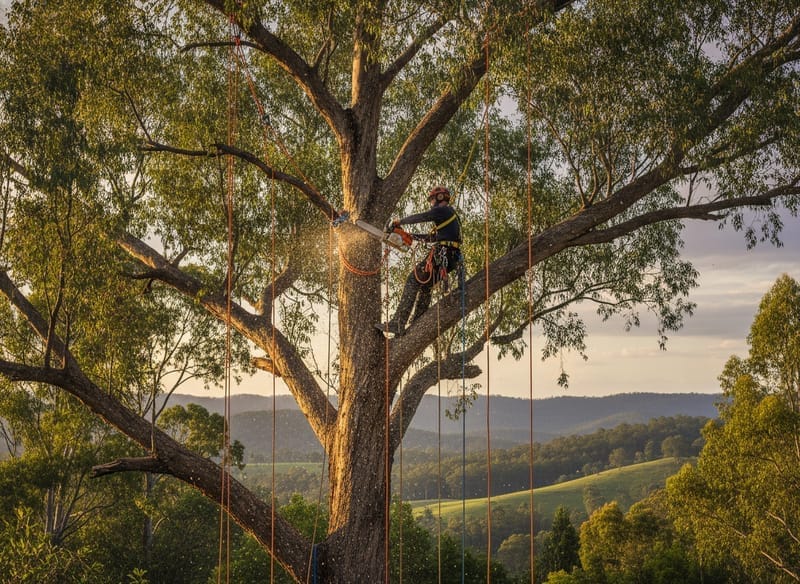
For limbs that have snapped but remain hung-up in the canopy, we utilize rope-access single and double-rope techniques alongside friction devices. This allows us to lower hazardous deadweight safely to the ground without damaging the surrounding retained canopy or the structures below.
When a massive native eucalypt has fallen onto a roof, shed, or critical infrastructure, traditional felling isn't an option. We coordinate with local crane operators to lift multi-tonne sections of timber vertically off the structure, minimizing any secondary damage.
For trees with torn limbs that can be salvaged, we apply AS4373-compliant target pruning. By cutting back to the branch collar rather than leaving ragged stubs, we facilitate the tree's natural compartmentalization of decay, preserving the canopy's health.
Post-storm acreage sites generate massive volumes of green waste. We deploy large-capacity 12-inch wood chippers, mini-loaders, and tipper trucks to rapidly process limbs into mulch and extract heavy logs, clearing your site efficiently.
Dealing with post-storm chaos is highly stressful, so we keep our emergency response process structured, rapid, and completely transparent from the first call to the final cleanup.
Navigating storm damage requires strict adherence to safety standards and local regulations. Our crew operates under the highest safety protocols, with our hands-on climbers holding AQF Level 3 in Arboriculture and our consulting arborists holding AQF Level 5. We are fully public liability insured and carry comprehensive WorkCover for all employees, giving you total peace of mind when we operate on your site.
All restorative pruning on storm-damaged canopies complies strictly with AS4373 standards, ensuring we do not compromise tree health through improper lopping. Where emergency storm clearing intersects with bushfire overlays or the NSW RFS 10/50 Vegetation Clearing Code of Practice, we ensure all work is fully compliant and documented for your protection.
King Creek is defined by its rural residential acreage, where homes sit alongside massive old-growth timber. Following heavy East Coast Lows, the saturated floodplain and hinterland soils lose their structural grip, making towering Blackbutt, Tallowwood, and Swamp Mahogany highly susceptible to root-plate failure. Because properties here are larger, storm debris can easily block critical access roads or destroy long boundary fence lines.
While rural-zoned land falls under North Coast Local Land Services, many urban and environmental zoned blocks in the Port Macquarie-Hastings Council area are governed by strict tree protection controls. Emergency removals of dead, dying, or dangerous trees are typically exempt from standard permit delays, provided Council is satisfied that the hazard was imminent. We highly recommend letting our AQF Level 5 arborists provide the necessary written justification and photographic evidence before clearing commences. This protects you from compliance issues, especially if the damaged tree is a scheduled koala food tree or sits within a mapped Koala Habitat Area.
After a major storm cleanup, your property may look different, but the work doesn't stop once the debris is gone. For trees that sustained moderate canopy damage and were retained via restorative pruning, monitor them closely over the next six to twelve months. Look for signs of dieback, sap weeping, or weak epicormic growth, as storm shock can sometimes take a full season to manifest.
If you notice fungal brackets forming on old storm wounds, ground heaving near a root plate, or a sudden lean in a previously stable tree during the next heavy rain, call us immediately for a reassessment. Regular hazard reduction pruning and deadwooding before the October-to-March storm season is your best defense against future catastrophic failures.
Storm cleanup pricing depends on the volume of debris and access.
We provide a clear, itemised quote for your storm cleanup.
Storm cleanup available in:
Contact our expert team for fast, safe, and thorough cleanup.
Request a Quote