Reduced Hazard
Lower the risk of branch failure during storms without killing the tree.
Safe, smart alternatives to traditional lopping to manage oversized trees on your block.
Providing expert canopy management across Lake Cathie and the Mid North Coast.
When locals search for Tree Lopping Lake Cathie, they usually have a tree that has grown dangerously large. Our goal is to solve that problem while preserving the structural integrity of the tree.
Lake Cathie's sandy coastal soils mean top-heavy trees can become unstable. We reduce the sail area of large Eucalypts to prevent them failing in severe east coast lows, using proper arborist techniques rather than destructive lopping.
Lower the risk of branch failure during storms without killing the tree.
Maintain a natural-looking canopy rather than an ugly collection of bare stumps.
Avoid massive council fines for illegal tree vandalism or non-compliant lopping.
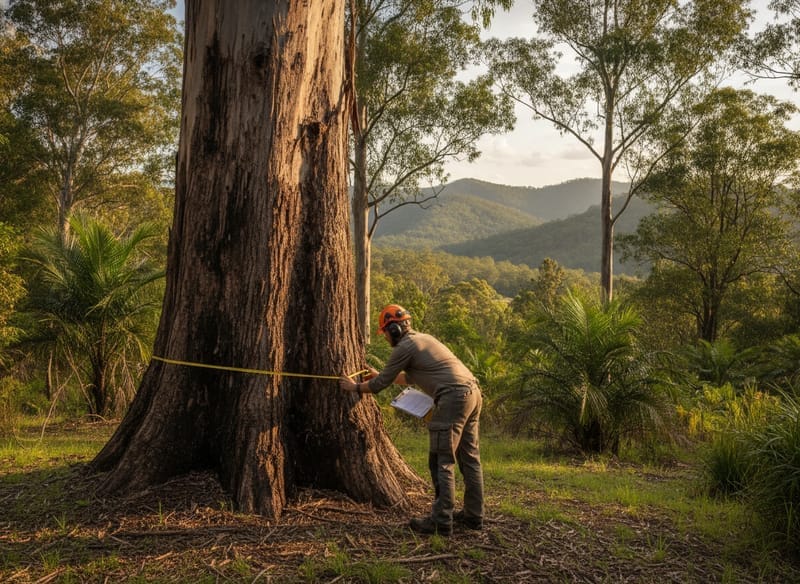
We visit to understand your goals—whether it's clearing a view, letting in light, or removing a hazard.
We recommend a reduction strategy or advise if a full removal is a smarter, safer investment.
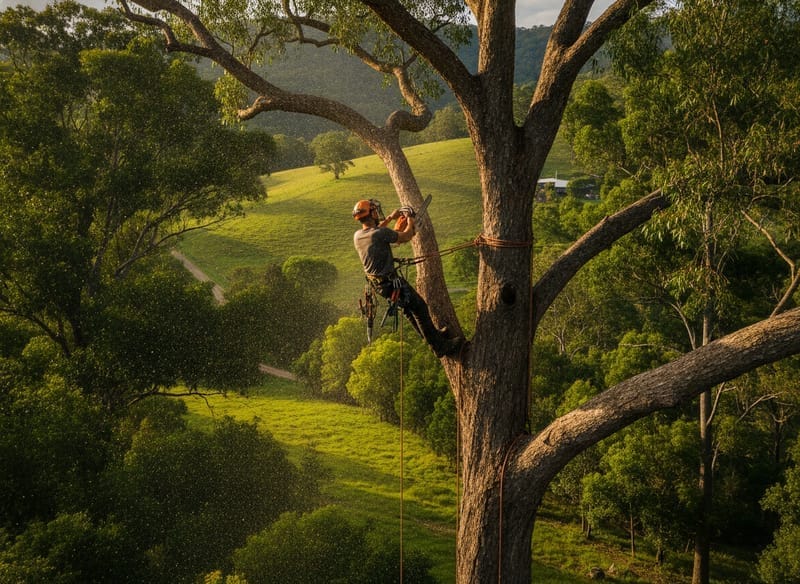
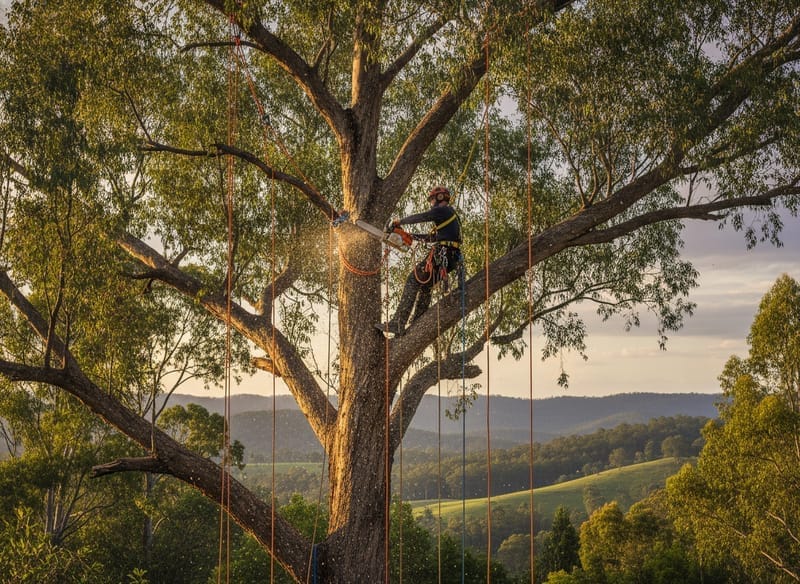
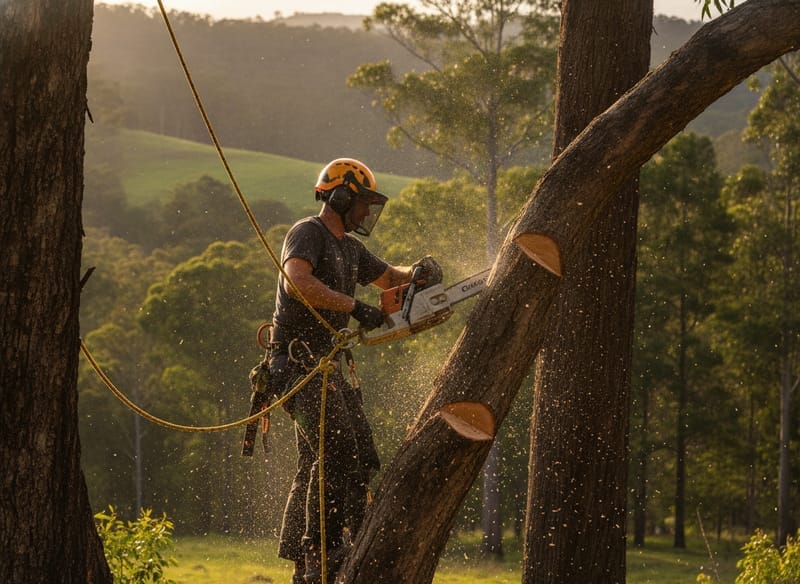
Our team climbs and cuts using arborist techniques to reduce the canopy safely.
Every branch is chipped, and the site is left perfectly tidy.
Living on the Mid North Coast means dealing with fast-growing coastal eucalypts, high rainfall, and summer storms that put heavy structural stress on large canopy trees. If you have overhanging branches threatening your roof or blocking your view, you might be searching for Tree Lopping Lake Cathie.
At Port Macquarie Arborist, our local team provides expert canopy reduction and pruning designed specifically for the humid subtropical climate of our region. We understand that when most Lake Cathie residents ask for "tree lopping", they simply want a tree made smaller, safer, or less intrusive.
Whether you are managing a towering Blackbutt on a residential block near the beach or maintaining native vegetation on rural acreage just inland, our climbers are equipped to help. We evaluate what you want to achieve and apply proper horticultural practices to deliver the clearance you need, keeping your property safe ahead of the east coast low season.
There is a significant difference between indiscriminate tree hacking and professional canopy management. True "lopping"—making random heading cuts that leave large, blunt stubs—is heavily discouraged under Australian Standard AS4373. Unfortunately, many under-qualified operators still offer this outdated practice.
When a tree is topped or heavily lopped, it responds by rapidly shooting out weak, poorly attached epicormic growth. In Lake Cathie's humid subtropical climate, these weak branches shoot up fast. When the summer storms or autumn east coast lows hit, these heavy, weakly attached limbs are the first to tear off and damage your roof or fences. Furthermore, large flush cuts expose the trunk to rapid fungal decay, significantly shortening the tree's life and turning it into a hazard.
Our solution is different. When you call our team to reduce the size of your tree, we use targeted, AS4373-compliant pruning cuts. By pruning to the branch collar and performing proper crown reduction, we achieve the clearance and height reduction you need without compromising the tree's structural integrity. You get a smaller, safer tree that looks natural, resists storm damage, and won't require emergency removal a few years down the line.
When clients ask us for tree lopping, they usually want to reduce the height or spread of their canopy. We achieve this using several approved methods that protect the tree's health.
The most common alternative to traditional lopping. We carefully reduce the height and spread of the canopy by cutting branches back to a suitable growth point. This maintains the tree's natural shape while significantly reducing its size and weight.
Ideal for properties needing clearance over driveways, roofs, or footpaths. We safely remove the lower branches of the canopy to lift the overall clearance height without removing the entire tree.
Targeted removal of specific problem branches, such as those overhanging boundary fences or encroaching on service lines, while leaving the rest of the healthy canopy intact.
We selectively remove secondary branches throughout the canopy to let more light through and reduce wind resistance. This is vital for managing coastal winds during east coast lows on the Mid North Coast.
We remove dead, diseased, or dying wood from the canopy before it can fall during a severe storm, making the tree inherently safer for the residential or traffic areas below.
Delivering safe and efficient Tree Lopping Lake Cathie property owners can rely on requires a highly structured approach. From your first call to the final sweep up, we manage the entire process.
Step 1: On-Site Assessment We visit your property to inspect the tree's health, species, and structural condition. We listen to your goals—whether that's clearing branches from your roofline, gaining more sunlight, or preparing for storm season.
Step 2: Strategy and Quoting We determine the best method to reduce the canopy safely. If access is tight or the terrain is soft, we plan for rope-access climbing. For easier roadside blocks, we may deploy our Elevating Work Platforms (EWPs). You receive a transparent, itemised quote.
Step 3: Canopy Reduction Our AQF Level 3 climbers safely access the canopy, performing precision cuts to lower heavy limbs using friction rigging gear. We carefully lower branches to the ground without damaging your garden, fences, or underground services.
Step 4: Processing and Cleanup Our ground crew processes the limbs through our high-capacity wood chippers, turning the removed branches into usable mulch. We clean the site thoroughly, ensuring your yard is left completely spotless before our trucks depart.
Tree work carries inherent risks, especially when operating top-handle chainsaws at height above residential homes. Our team operates to strict safety and compliance frameworks to protect your property. Every job we undertake complies strictly with AS4373 - Pruning of Amenity Trees, ensuring we never perform damaging topping cuts.
Our climbers hold AQF Level 3 in Arboriculture and current working at heights certifications. If your project involves development or construction, our consulting arborists can provide AQF Level 5 reports aligned with AS4970 - Protection of Trees on Development Sites. Furthermore, our business is fully public liability insured and covered by comprehensive WorkCover, giving you absolute peace of mind while our team is on your site.
Lake Cathie features a unique mix of coastal dune properties, floodplains, and established acreage blocks. This environment supports majestic native species like Blackbutt, Tallowwood, and Swamp Mahogany. While these trees provide excellent canopy cover, they frequently overhang homes and require professional size management.
Under the Port Macquarie-Hastings Council guidelines, you generally need a permit to prune or remove any tree over 3 metres high or with a trunk diameter greater than 100mm. However, pruning branches up to 50mm in diameter is typically exempt if performed to AS4373 standards. Deadwooding and clearing palm fronds are also largely exempt.
Our team navigates these local regulations daily. Whether you are dealing with a Norfolk Island Pine on the beachfront or a towering eucalypt near a mapped Koala Habitat Area, we know exactly what is permitted. We help you understand the 5-metre dwelling exemption rule and can provide the necessary arborist reports if council approval is required for heavier reductions.
After we complete our pruning work, your tree will need a little time to recover. A proper AS4373-compliant reduction minimises stress, but we still recommend applying a good layer of the fresh mulch we leave behind over the structural root zone to retain moisture and improve soil health.
Keep an eye on the canopy over the next few growing seasons. Because Lake Cathie receives roughly 1,500mm of annual rain, eucalypts and fast-growing coastal species will push out new growth quickly. We generally recommend scheduling an inspection every two to three years to ensure the canopy remains balanced, healthy, and safely clear of your roofline. If you notice any unusual dieback, call our team immediately.
The cost to manage a large canopy depends on the tree's size and access.
Contact us today for a free quote on safe, effective canopy management.
We manage overgrown trees across:
Call us for a free quote on proper canopy reduction or removal.
Get a Free Quote